
A slow dishwasher supply leak fed months of hidden moisture under the sink cabinet and kitchen island. Here’s how Mold Pro found it, removed it, and prepared the kitchen for reconstruction.
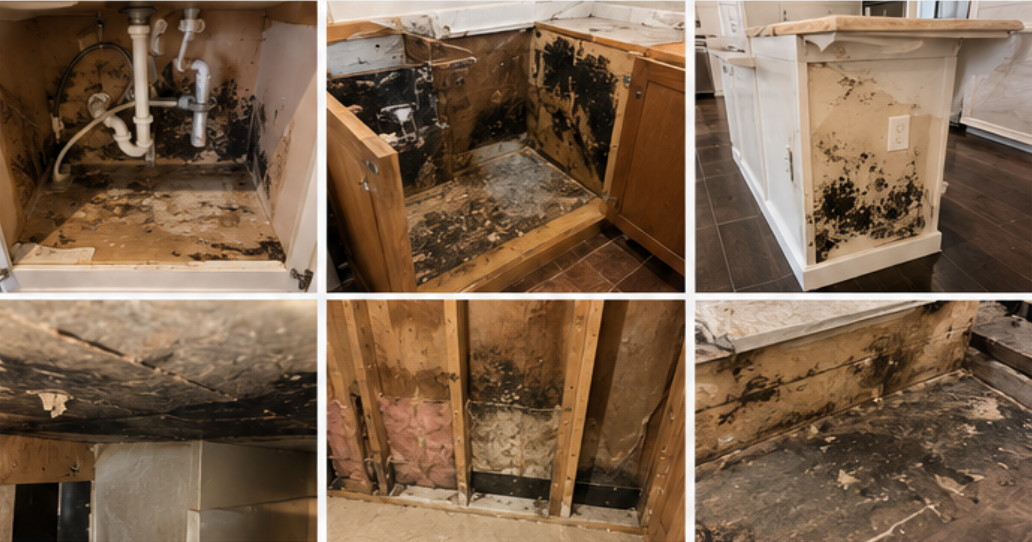

The homeowner first noticed a musty smell that lingered near the sink cabinet and kitchen island. It wasn’t strong, but it didn’t go away — even after deep cleaning the kitchen. Read why a musty smell near a cabinet deserves a moisture check.
Mold Pro’s investigation revealed a slow leak from the dishwasher supply connection, combined with long-term moisture accumulation beneath the cabinetry and island structure. Moisture had become trapped beneath the toe-kicks, cabinet bases, lower drywall sections, and portions of the subfloor — creating ideal conditions for mold amplification. By the time the smell was noticeable upstairs, the damage was already extensive.
This is a common pattern in Gaithersburg single-family homes: dishwashers and refrigerator water lines develop pinhole leaks that go unseen for months because the cabinet walls hide them. A periodic mold inspection with thermal imaging is the most reliable way to catch hidden moisture before it becomes a remediation project.
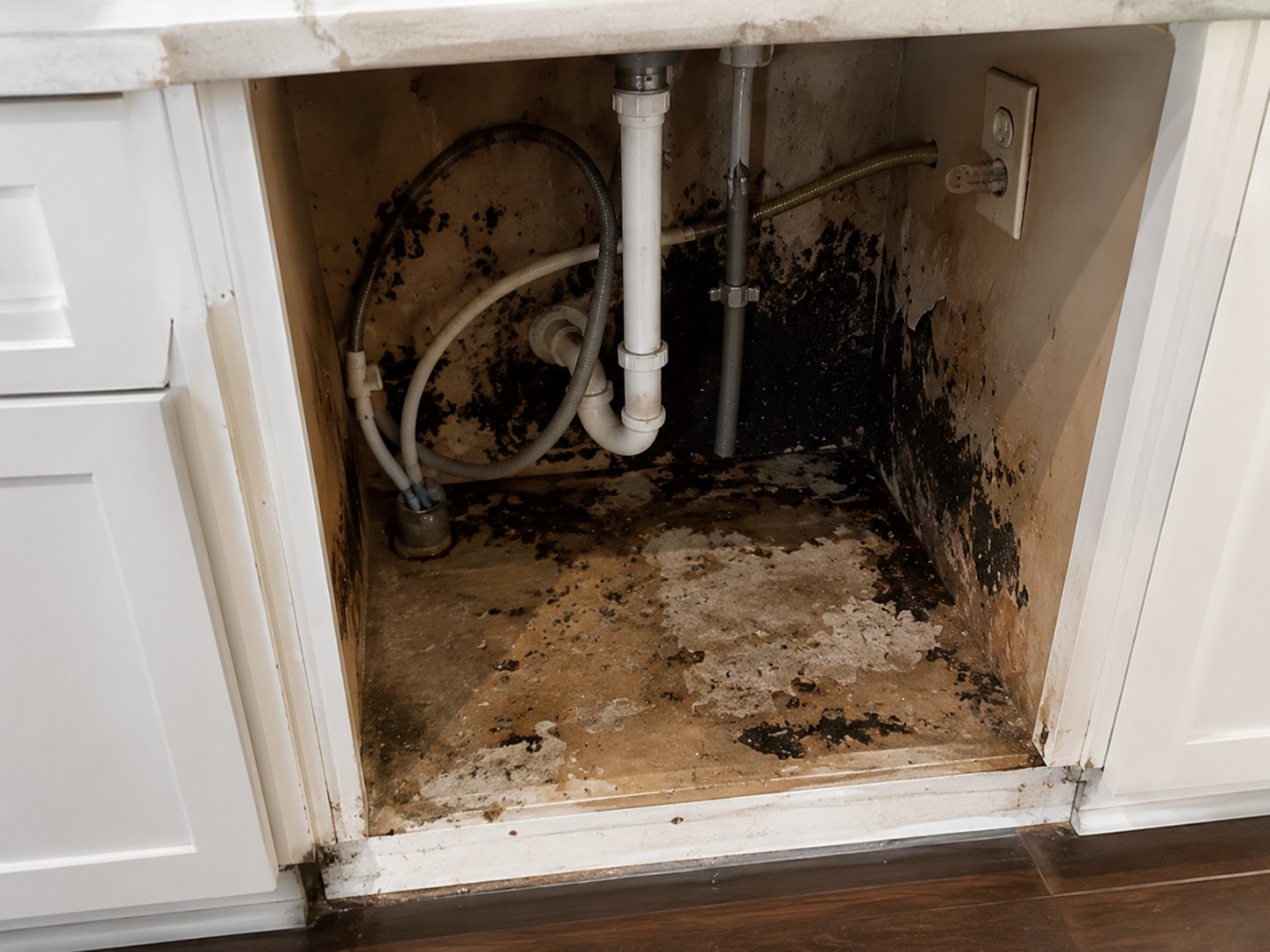
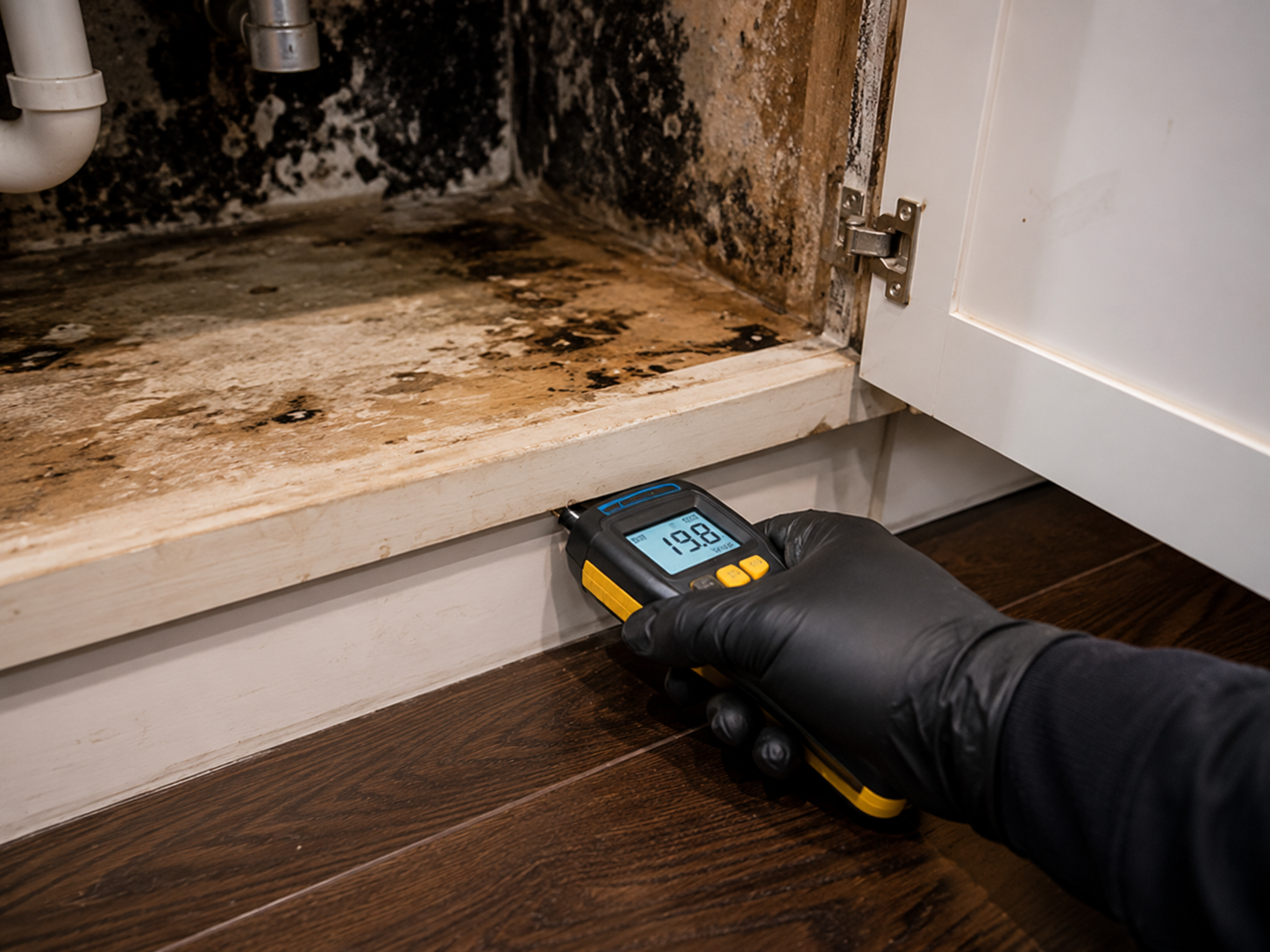
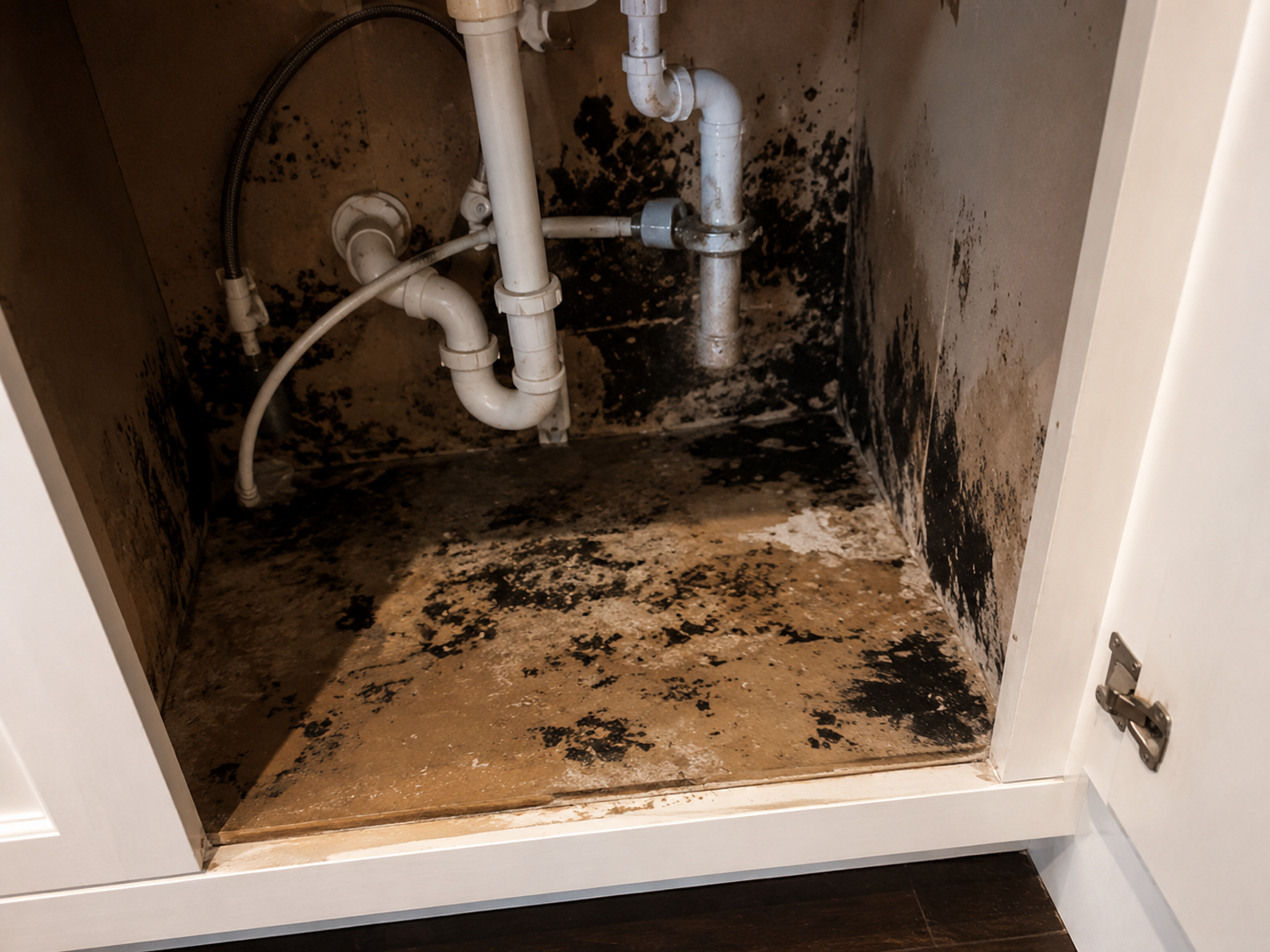
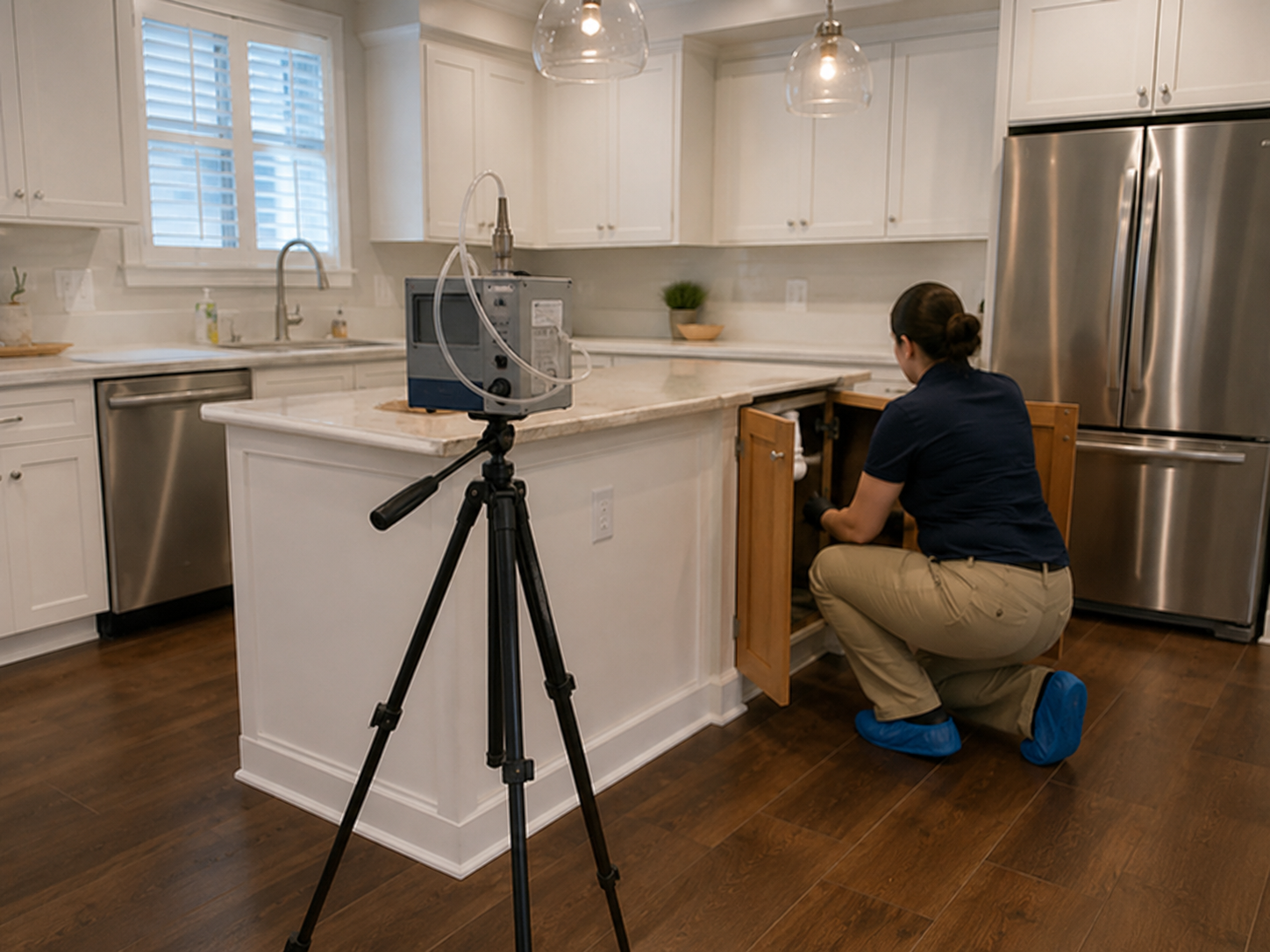
All work completed in strict accordance with the ANSI/IICRC S520 Standard for Professional Mold Remediation, the same protocol followed on every mold remediation service we perform. Each phase documented with photos and moisture readings throughout.
Curious what a project like this costs? See our mold remediation cost guide for Montgomery County for typical price ranges by project size. For the concealed-leak dry-out that comes first, our water damage restoration pricing guide explains the starting prices.
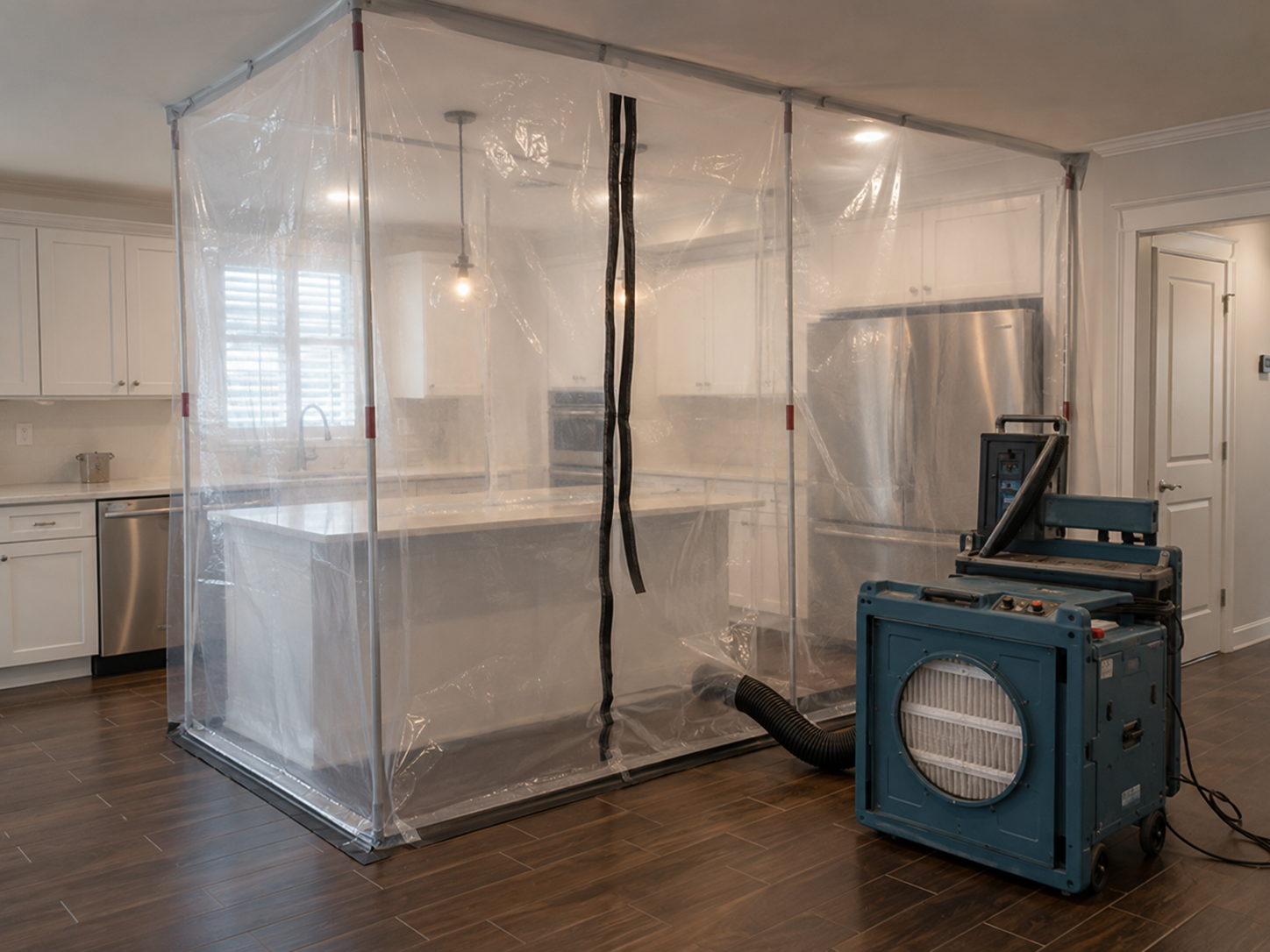
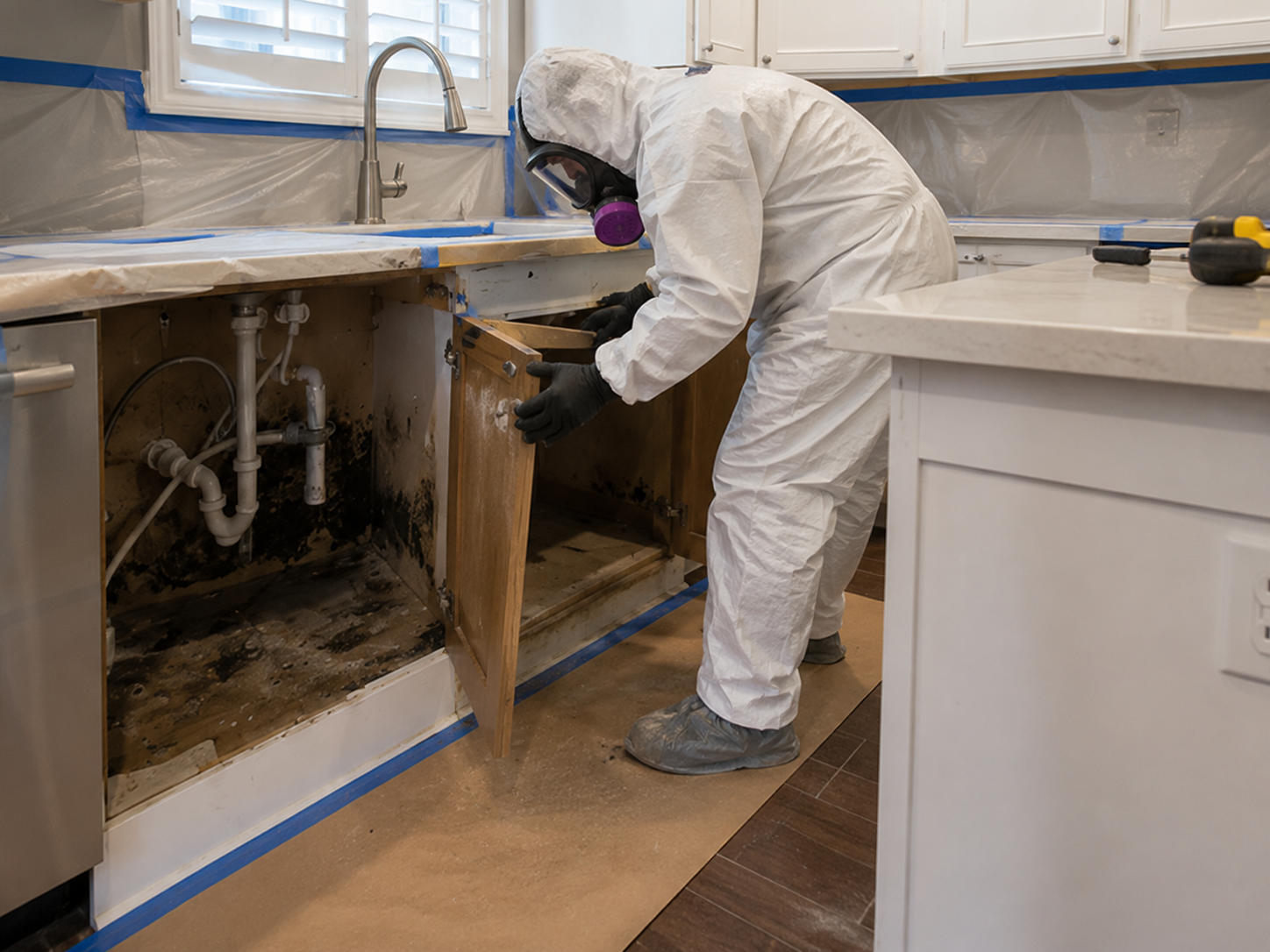
Every Mold Pro project follows the industry gold standard — and includes a 2-Year Mold-Free Warranty.
See Our Full Process →One email a week with practical mold & moisture prevention tips for Montgomery County homes.
Mold can colonize porous materials within 24–72 hours of sustained moisture exposure. Kitchen dishwasher leaks are particularly dangerous because water often runs under cabinets and into subfloor cavities where it goes undetected for weeks or months.
Porous materials with confirmed mold penetration must be removed — typically drywall, insulation, cabinet backing, and affected subfloor sections. Non-porous materials like countertops, plumbing fixtures, and metal framing can usually be cleaned and treated in place.
Kitchen mold exposure can cause respiratory irritation, allergic reactions, and aggravated asthma — especially concerning because kitchens are high-traffic areas where families spend significant time. Once detected, prompt professional remediation is recommended.
Typically yes, if the leak was sudden and accidental (supply line burst, connection failure) and reported promptly. Gradual leaks from deferred maintenance or worn gaskets may be excluded. Mold Pro provides insurance-ready documentation including photos, moisture readings, and itemized scope. See how a mold insurance claim works in Maryland.
Install leak detection sensors behind dishwashers, refrigerators, and under sinks. Use braided stainless steel supply lines (not rubber). Inspect connections annually. Maintain adequate ventilation and address any moisture or condensation issues promptly.
Whether it’s a hidden leak under a kitchen cabinet, a basement, or a whole-home issue — our IICRC-certified team serves the full Montgomery County and DMV area. Free site assessment, no obligation.
Proudly serving Montgomery County and the greater Washington DC metro area

Fill out the form below and we’ll contact you within 1 hour.
What do you need help with?
Which mold service do you need?
Do you see visible mold?
Have any photos? (optional)
Photos help us give a more accurate estimate.
How urgent is your situation?
What's your main concern?
Best time to call you?
Complete your request
A licensed technician reviews this personally — response within 1 hour, 24/7.